Barndominium Builders in Monroe County, Michigan
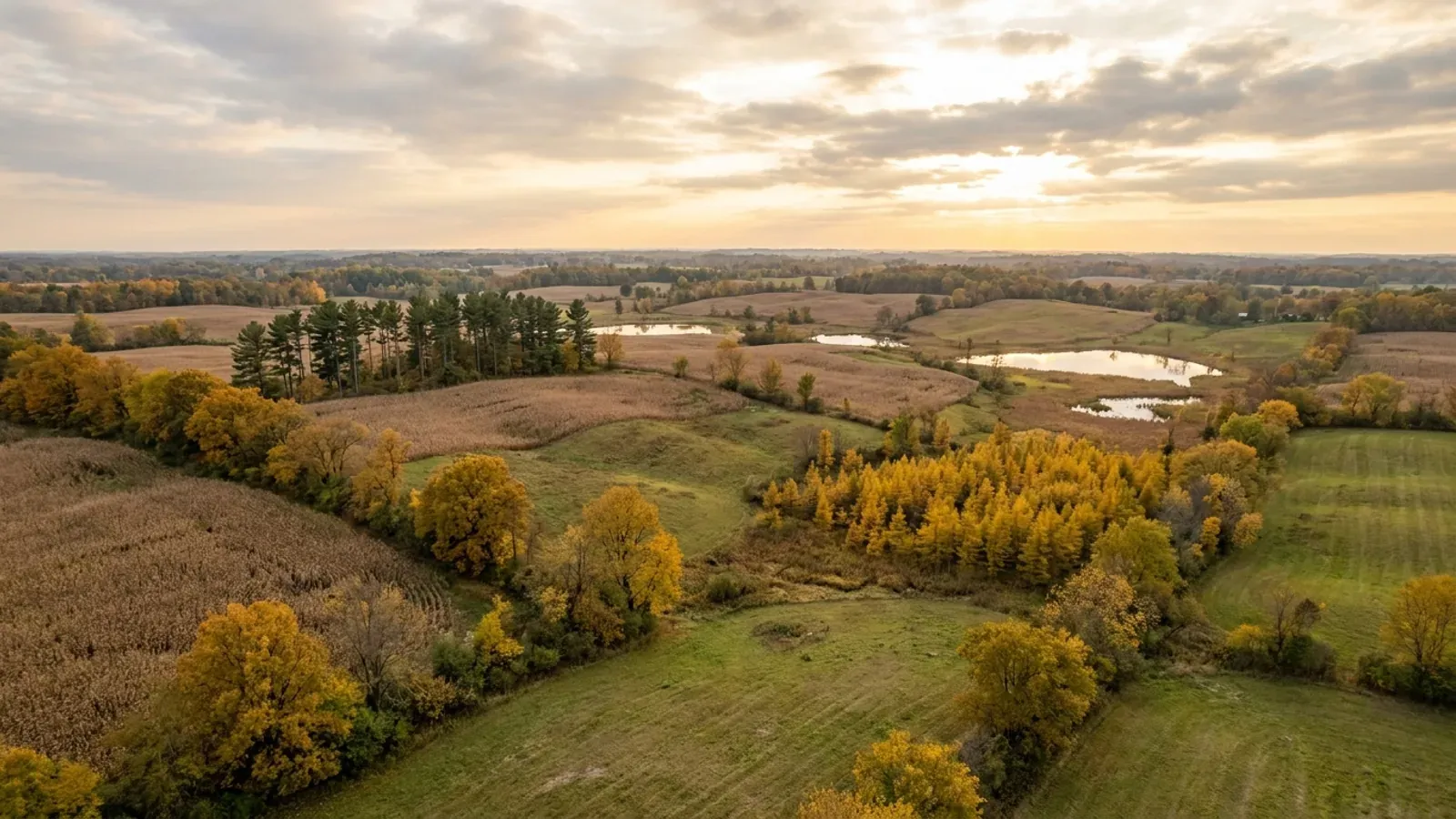
Monroe County runs from the Lake Erie shoreline inland across flat farmland toward the Washtenaw and Lenawee county lines, and that open farmland is where most barndominium projects here take shape. The county has fifteen townships, and each one matters: the township where the parcel sits usually decides the zoning and runs the building department, while the county health department rules on the well and septic. A shop-and-home plan on five or ten acres is a normal request in this part of the state, and a pole barn home is the frame most rural buyers here ask about first. Barndominium kits suit owners with their own crew and equipment; our turnkey builds suit buyers who want one team from the soil test to the certificate of occupancy. Near the lakeshore and along the River Raisin, drains and wetlands shape where a house can sit, so the site plan comes before the floor plan. If you already have land in mind, send the parcel number through the survey and we will look up its township, its zoning district and the soil questions before any drawing starts. For a lot inside the city itself, see our Monroe page.
Monroe County at a glance
- County
- Monroe County
- Building permit
- Township, county or state
- Zoning
- Township zoning
- Wastewater
- Septic and well via the health department
Barndominium Kits and Plans for Monroe County
The parcel decides the budget more than the floor area does, so each option is priced against your land rather than a rate card.
Barndominium Kits
Barndominium kits and shell kits for sale in Michigan, sized for lake-effect snow and your site, with an honest answer on modular and prefab options.
Custom Plans
Custom barndominium plans and floor plans for Michigan land, designed around your site, your shop and the permit set your building department needs.
Pole Barn Homes near Monroe County
A pole barn home sets its frame on posts and trusses (the engineering term is post-frame), which often suits a simple, wide layout with a shop bay under the same roof. Whether it fits your parcel comes down to the zoning and the site, set out below.
Permits, Zoning and Septic in Monroe County
Four offices usually decide whether a barndominium can go on a given parcel. Here is who they are in Monroe County, taken from the office or document that publishes each rule. Rules change, so check them again against your parcel before anything is drawn.
Your township, city or village building department; the state Bureau of Construction Codes (LARA) in the Village of Estral Beach
Monroe County has no county building program. On the BCC Statewide Jurisdiction List every township, and each city and village, runs its own building program, so the permit comes from the township office where your parcel sits. The one exception is the Village of Estral Beach, where the state Bureau of Construction Codes enforces the code. Confirm your township on the list before applying.
Source: Statewide Jurisdiction List, Bureau of Construction Codes (michigan.gov)
Your township planning commission and township board
Zoning in rural Monroe County is township zoning. The county's own guide to township rezoning starts at the township hall: the township planning commission holds a public hearing and makes a recommendation, and the township board makes the final decision. Cities and villages keep their own ordinances, so check the district and minimum lot size with the township first.
Source: Zoning, Monroe County (co.monroe.mi.us)
Monroe County Health Department, Environmental Health Division
Where sanitary sewer is not available, a new home needs an onsite sewage system permitted by the Monroe County Health Department under its Environmental Health Sanitary Code, starting with a site assessment and soil borings. The same department issues well permits for new construction.
Source: Onsite Sewage Disposal, Monroe County (co.monroe.mi.us)
Monroe County Drain Commissioner (county enforcing agency)
The Drain Commissioner runs the county soil erosion permit. Its application asks for the acres to be disturbed, the soil type, a site plan, a soil erosion control plan and the distance to every lake, stream, wetland and open ditch drain nearby, so a waterside or larger rural site should plan for it early.
Source: Soil Erosion Sedimentation Control Permit Application, Monroe County Drain Commissioner (co.monroe.mi.us)
- Shallow bedrock and septic
- The Monroe County Health Department's site assessment examines the top four feet of native soil, and sites are denied if bedrock is within four feet of grade unless areas for both an original and a replacement system with four feet of natural soil are found. Unsuitable soils need engineered plans from a licensed engineer or registered sanitarian (read 27 September 2026).
- Wells under the county code
- Since April 1, 2001 the Monroe County Sanitary Code has governed on-site water supplies for new construction and replacement wells. A new well's water is sampled by a county sanitarian and the permit is finalised once a safe sample is returned (Monroe County Health Department, read 27 September 2026).
Source: Onsite Sewage Disposal, Monroe County (co.monroe.mi.us)
Source: Onsite Water Supply, Monroe County (co.monroe.mi.us)
Building on land near Monroe County
Much of Monroe County is low and flat, crossed by county drains and roadside ditches, so the first site questions are drainage, the depth to bedrock and the distance to the nearest drain or wetland. The county health department's soil borings decide whether a conventional septic field fits, and a failed site can mean a designed alternative system or a different building spot on the same parcel. Township zoning sets minimum lot sizes and whether a large accessory building is allowed. Lakeshore land near Lake Erie brings its own reviews, so check with EGLE before buying there. Our site preparation crew handles clearing, fill and the driveway once the spot is fixed.
Other places in this part of Michigan
Livingston, Lapeer, St. Clair & Monroe
- Howell
- Port Huron
- Monroe
- Livingston County
- Lapeer County
- St. Clair County
- Monroe County
Have land in or near Monroe County? Tell us about the parcel and what you want on it, and we will check it against the local rules before anything is drawn.
Building in Monroe County: questions
Start the surveyHow much does it cost to build a barndominium in Monroe County?
Do I need a building permit for a barndominium in Monroe County?
Will my land pass for a septic system in Monroe County?
Can I build a barndominium with a big shop in a Monroe County township?
Keep reading
What usually comes next once you know what Monroe County allows.
Barndominium Cost Guide
Sourced per-square-foot ranges by tier and size, and what moves the number on your land.
Read itIs a Barndominium Legal in Michigan?
Zoning, permits, septic and wells, and who inspects, before you buy the land.
Read itHow Long Does It Take?
From parcel to move-in, and which steps set the clock.
Read itSources for this page
The published pages behind the Monroe County facts above. Rules change, so check the current version with the office before you rely on it.
- Statewide Jurisdiction List, Bureau of Construction CodesBuilding permitmichigan.gov
- Zoning, Monroe CountyZoningco.monroe.mi.us
- Onsite Sewage Disposal, Monroe CountySewer, septic and well; Shallow bedrock and septicco.monroe.mi.us
- Soil Erosion Sedimentation Control Permit Application, Monroe County Drain CommissionerSoil erosion controlco.monroe.mi.us
- Onsite Water Supply, Monroe CountyWells under the county codeco.monroe.mi.us
Other places near Monroe County
Nearby places with their own pages. Across a city limit, a township line or a county line the permit office, the zoning and the septic rules can change, so each is covered separately.
Building in Monroe County?
Start with the survey. Tell us where the land is and what you want on it, and we will come back with which offices decide it, what the zoning allows, and a plan to fit.