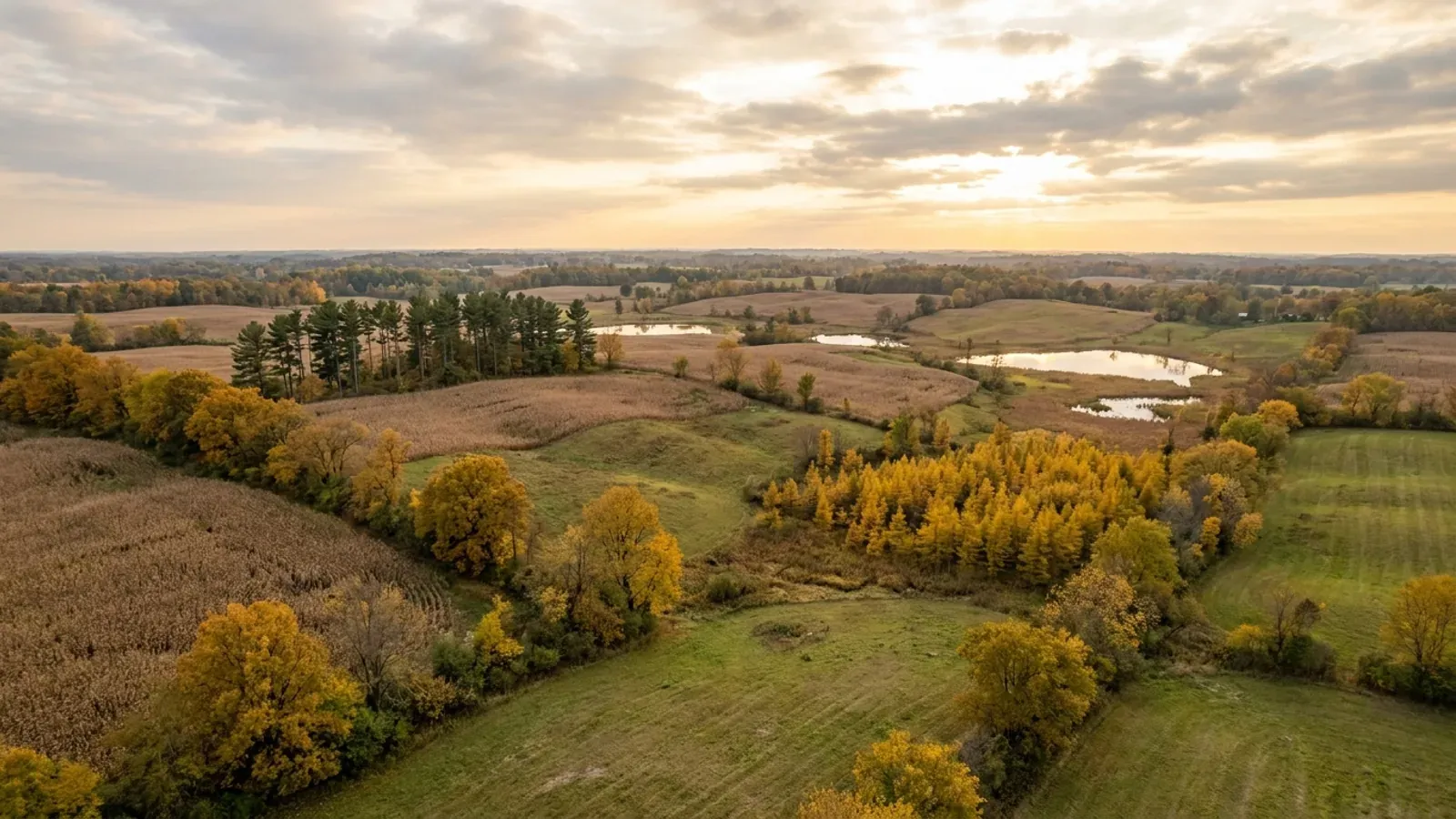
Barndominium Builders in Livingston County, Michigan
Livingston County is where a lot of Metro Detroit buyers go when a subdivision lot is too small for the house-and-shop they want: its townships still offer parcels big enough for a barndominium with room for equipment, a garden or a few animals. The trade-off is that more offices are involved than on a city lot. Your township writes the zoning, the county building department issues the building permit across most of the county, the county health department approves the well and septic, and the Drain Commissioner runs soil erosion permits. Barndominium kits suit a buyer who wants to put up the shell with their own crew; a pole barn home is the frame most people here picture; and a turnkey build keeps one team responsible from clearing to final inspection. If you are looking at the county seat itself, city lots there follow different rules, covered on the Howell page. Tell us which parcel you are weighing through the survey, and we will check its township, soil evaluation status and distance to water before any plan is drawn.
Livingston County at a glance
- County
- Livingston County
- Building permit
- Township, county or state
- Zoning
- Township zoning
- Wastewater
- Septic and well via the health department
Barndominium Kits and Plans for Livingston County
The parcel decides the budget more than the floor area does, so each option is priced against your land rather than a rate card.
Barndominium Kits
Barndominium kits and shell kits for sale in Michigan, sized for lake-effect snow and your site, with an honest answer on modular and prefab options.
Custom Plans
Custom barndominium plans and floor plans for Michigan land, designed around your site, your shop and the permit set your building department needs.
Pole Barn Homes near Livingston County
A pole barn home sets its frame on posts and trusses (the engineering term is post-frame), which often suits a simple, wide layout with a shop bay under the same roof. Whether it fits your parcel comes down to the zoning and the site, set out below.
Permits, Zoning and Septic in Livingston County
Four offices usually decide whether a barndominium can go on a given parcel. Here is who they are in Livingston County, taken from the office or document that publishes each rule. Rules change, so check them again against your parcel before anything is drawn.
Livingston County Building Department for most townships and villages; a few cities and townships run their own
The state jurisdiction list shows the Livingston County Building Department serving the villages of Fowlerville and Pinckney and fourteen townships, from Cohoctah to Unadilla. The cities of Brighton and Howell and the townships of Brighton and Green Oak run their own programs instead. Look up your township on the list before applying.
Source: Statewide Jurisdiction List, Bureau of Construction Codes (michigan.gov)
Your township's zoning administrator (cities and villages zone separately)
Each township adopts its own zoning ordinance, map and master plan, and the county planning department links to every one of them. Its parcel zoning map is only a generalized picture; for district rules, minimum lot size and setbacks, the county points buyers to the zoning administrator of the township, city or village.
Source: Community Plans & Zoning, Livingston County (milivcounty.gov)
Livingston County Health Department, Environmental Health Division
Septic permits follow an approved soil evaluation, which sets site-specific requirements. The well and septic go on one application, with a certified survey and a plot plan for new construction, and the completed septic permit is sent to the building department before it will issue a certificate of occupancy.
Source: Septic Permits, Livingston County (milivcounty.gov)
Livingston County Drain Commissioner
A new single-family house, pole building or pool needs the Drain Commissioner's residential soil erosion permit if the disturbance reaches an acre, or if it lies within 500 feet of surface water, which the county reads to include ponds, swamps, wetlands and county drains. Projects over 225 square feet may still need a waiver.
Source: Residential SESC Permits, Livingston County (milivcounty.gov)
- The order of permits on vacant land
- For new building construction the Livingston County Health Department lists what comes before the building permit: an approved soil evaluation and septic permit, a land use permit from the local township, a soil erosion permit from the Drain Commissioner and a driveway permit from the Road Commission (read 27 September 2026).
- Well water varies by area
- Where public water is not available a home needs a well, and the Livingston County Health Department says it tracks areas where water quality and quantity may be an issue; it issues residential well permits on the same application as the septic permit (read 27 September 2026).
Source: Septic Permits, Livingston County (milivcounty.gov)
Source: Residential Water Wells, Livingston County (milivcounty.gov)
Building on land near Livingston County
Township land in Livingston County usually means a private well and a septic system, so the soil evaluation is the first test of a parcel: it decides whether a conventional system fits and where the house can go. Next, measure the distance to the nearest lake, pond, stream, wetland or county drain; inside 500 feet, even a modest house site needs an erosion permit. Then read the township's zoning for minimum lot size, setbacks and any limits on accessory buildings, since a large shop bay can run into them. Ask the health department whether the area has known well-water issues before you commit.
Other places in this part of Michigan
Livingston, Lapeer, St. Clair & Monroe
- Howell
- Port Huron
- Monroe
- Livingston County
- Lapeer County
- St. Clair County
- Monroe County
Have land in or near Livingston County? Tell us about the parcel and what you want on it, and we will check it against the local rules before anything is drawn.
Building in Livingston County: questions
Start the surveyHow much does it cost to build a barndominium in Livingston County?
Do I need a building permit for a barndominium in Livingston County?
Who decides whether I can build a barndominium on my Livingston County parcel?
Can I build on land that has no sewer in Livingston County?
Keep reading
What usually comes next once you know what Livingston County allows.
Barndominium Cost Guide
Sourced per-square-foot ranges by tier and size, and what moves the number on your land.
Read itIs a Barndominium Legal in Michigan?
Zoning, permits, septic and wells, and who inspects, before you buy the land.
Read itHow Long Does It Take?
From parcel to move-in, and which steps set the clock.
Read itSources for this page
The published pages behind the Livingston County facts above. Rules change, so check the current version with the office before you rely on it.
- Statewide Jurisdiction List, Bureau of Construction CodesBuilding permitmichigan.gov
- Community Plans & Zoning, Livingston CountyZoningmilivcounty.gov
- Septic Permits, Livingston CountySewer, septic and well; The order of permits on vacant landmilivcounty.gov
- Residential SESC Permits, Livingston CountySoil erosion controlmilivcounty.gov
- Residential Water Wells, Livingston CountyWell water varies by areamilivcounty.gov
Other places near Livingston County
Nearby places with their own pages. Across a city limit, a township line or a county line the permit office, the zoning and the septic rules can change, so each is covered separately.
Building in Livingston County?
Start with the survey. Tell us where the land is and what you want on it, and we will come back with which offices decide it, what the zoning allows, and a plan to fit.