Barndominium Site Preparation in Michigan
Site preparation is everything between buying the land and pouring the foundation: finding out what the parcel can take, clearing and grading, building the drive, and preparing a building pad that stays dry and stable through Michigan freeze and thaw. We prepare barndominium sites in Michigan in the order the approvals demand, because on rural land the septic system and the well decide where the house can go, not the other way round.
Septic, Well and Soil Before the Bulldozer
On land without sewer, the septic system decides where the house can go. In Michigan, septic permits for a home are issued by your county or district health department under its own sanitary code, so the soil tests and the system rules vary from county to county. The well is drilled by a state-registered well drilling contractor to Michigan's well construction code and has to sit well away from the septic tank and drain field. Where a city, village or township has a public sewer available, it can require the house to connect.
Moving earth has its own permit. Under Michigan's soil erosion rules, an earth change that disturbs one acre or more, or that lies within 500 feet of a lake or stream, needs a soil erosion and sedimentation control permit from the county or municipal enforcing agency before work starts, and the building permit is not issued until it is in hand. Filling or building in a regulated wetland needs a permit from the state Department of Environment, Great Lakes, and Energy (EGLE), and building in a mapped floodplain needs one too. We check for all of it before the first tree comes down.
The season matters as much as the soil. Frost in the ground stops footings and slows grading, and in spring Michigan's seasonal weight restrictions cut the loads allowed on many roads, with the road agency posting when they are in effect. A loaded concrete or gravel truck that cannot reach the site in April is a schedule problem, so we plan the site work around the thaw.
Buying Land for a Barndominium in Michigan
If you are still looking for land, the most useful thing you can do is check it before you buy. Ask the local health department whether the soil will take a septic system, find out who zones the parcel and whether a house is allowed on it, look for wetlands and floodplain, and check the road access for a delivery truck. We help buyers work through that list on a parcel they are considering, so the land fits the barndominium they have in mind.
Site Preparation: how the work runs
Four stages, in this order. The sequence matters more than it looks: settling the zoning, the septic and well permits and the building permit before anything is fabricated is what keeps a Michigan build from stalling.
Land and soil checks
We start with who permits the septic system and whether the soil suits one, where the well can go, whether the building area is within 500 feet of a lake or stream, and whether wetlands or floodplain limit where the house can sit.
Layout on the ground
We place the house, the shop, the drive, the septic area and the well on the site plan, keeping the well well away from the septic system as the well code requires, and keeping the building off wetlands and wet ground.
Clearing, drive and pad
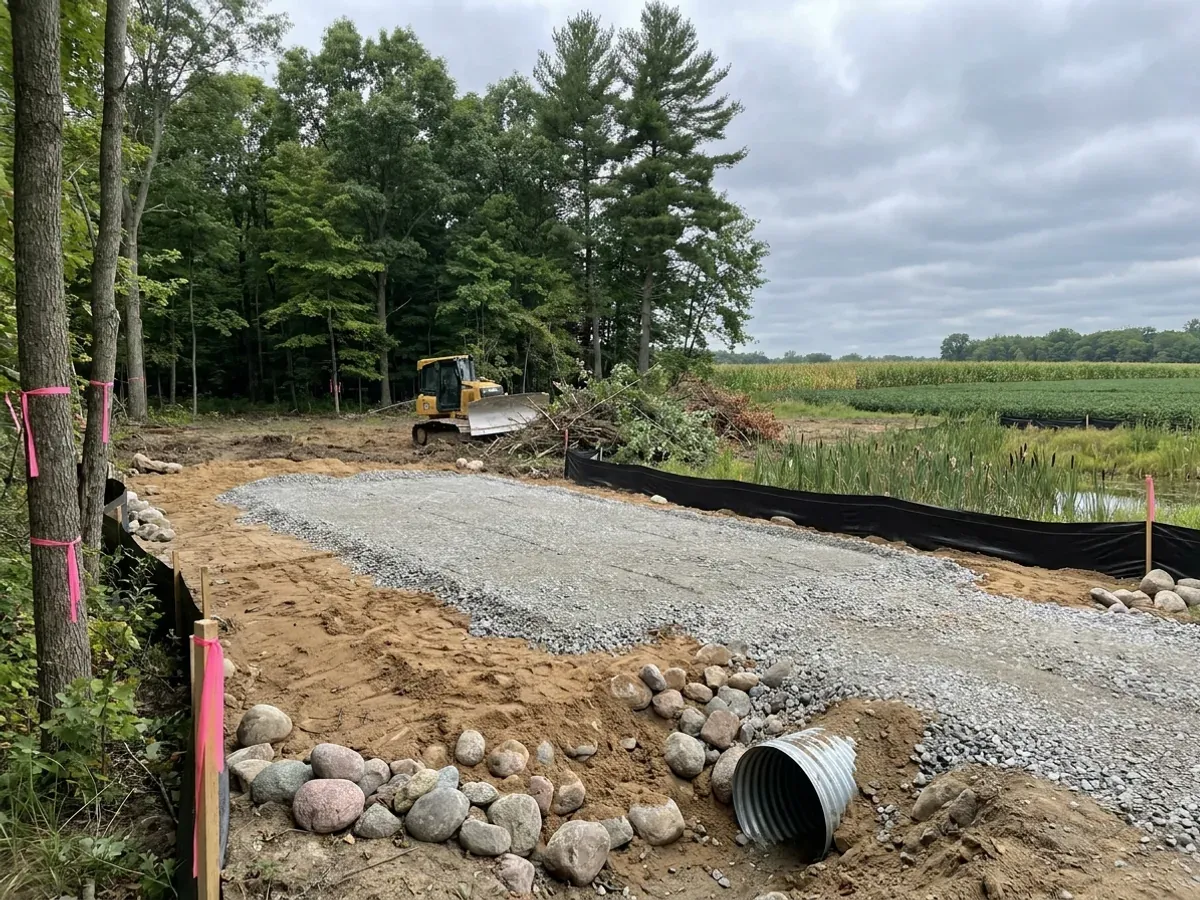
Trees and topsoil come off the building area, the drive goes in with a base that can carry a loaded truck, and the building pad is built up and compacted so water drains away from the foundation.
Erosion control and utilities
Silt fence and other erosion controls go in before the ground is opened, under the soil erosion permit where one is needed; Michigan expects owners to keep soil on the site even where no permit is required. Utility trenches follow once the septic and well locations are fixed.
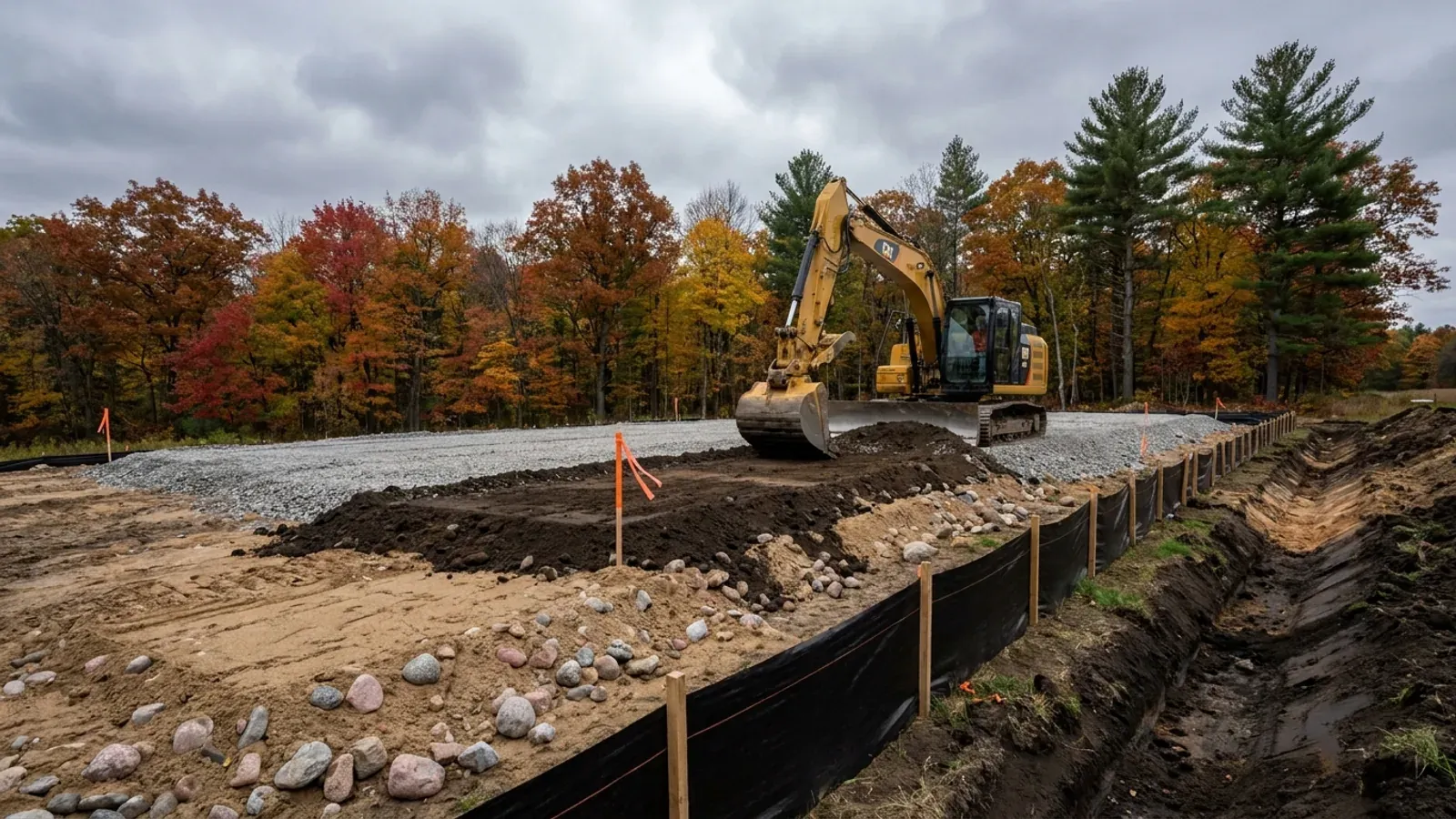
A pad that stays put through a Michigan winter
NOAA describes Michigan's climate as cold winters and warm, humid summers, with more spring rain projected. A building pad that holds water heaves when it freezes and softens when it thaws. We build the pad to drain, take the footings to the depth the code and the building official require, and slope the ground away from the building so water never sits against it.
Site Preparation across Michigan
In Michigan the question that matters is which local unit your land sits in. Who zones it, who issues the building permit, which health department permits the septic system and the well, and who reviews earth changes near water all vary from one place to the next. The service area pages set out who does what for each city and county we cover.
Barndominium builders across Michigan.
Every city, township and county in Michigan has its own answer on zoning, permits and septic. The service area pages set out who does what.
What actually decides the price
Square footage is the number everyone leads with, and it is rarely the one that moves a barndominium budget. These four do.
-
Clearing
A wooded lot costs more to clear than an open field, and stumps and topsoil have to go somewhere. Keeping the trees you want also takes planning.
-
Drive length and base
A long drive on soft ground needs a thick, well-drained base to carry a concrete truck and a steel delivery. It is one of the biggest site costs on rural land.
-
Septic and well
A larger or alternative septic system for heavy or wet soil costs far more than a conventional one, and well depth varies with the ground. Both follow the health department's rules and the site, not the size of the house.
-
Slope and drainage
A sloping lot needs cut and fill, and wet ground needs drainage. A walkout basement can turn a slope into an advantage.
Site Preparation in Michigan: common questions
6 questions we get asked most often about building in Michigan. If yours is not on the list, ask it directly.
What does site preparation include?
Do you drill wells or install septic systems?
Should I check the land before I buy it?
Can you prepare a site in winter?
Do I need a soil erosion permit to build?
Who issues septic permits in Michigan?
Sources
- State Climate Summaries 2022: Michigan — NOAA National Centers for Environmental Information
- MCL 257.722, seasonal weight restrictions — Michigan Legislature
- Onsite Wastewater Management — Michigan Department of Environment, Great Lakes, and Energy
- MCL 333.12704, well drilling contractor registration — Michigan Legislature
- MCL 333.12753, connection to public sanitary sewer — Michigan Legislature
- R 323.1701 to R 323.1714, soil erosion and sedimentation control rules — Michigan Administrative Code
- MCL 324.9105, county and municipal soil erosion enforcing agencies — Michigan Legislature
- MCL 324.9116, erosion control where no permit is required — Michigan Legislature
- MCL 324.30304, wetland permits — Michigan Legislature
- MCL 324.3108, floodplain permits — Michigan Legislature
Keep reading
The pages that answer the next question this one raises.
Permits & Approvals
The zoning, septic, well and building approvals the site work has to wait for.
Read itCan You Build a Barndominium in Michigan?
Zoning, the residential code and what rural land allows.
Read itService Areas
Who issues permits and septic approvals in each city and county we cover.
Read itReady to put site preparation against a real plan? Start there and the rest follows.
Tell us about the land
Tell us where the parcel is and what you want on it, and we will come back with who has jurisdiction, what the land needs before it can be built on, and a realistic budget range. Starting the survey costs nothing.