Barndominium Builders in Oakland County, Michigan
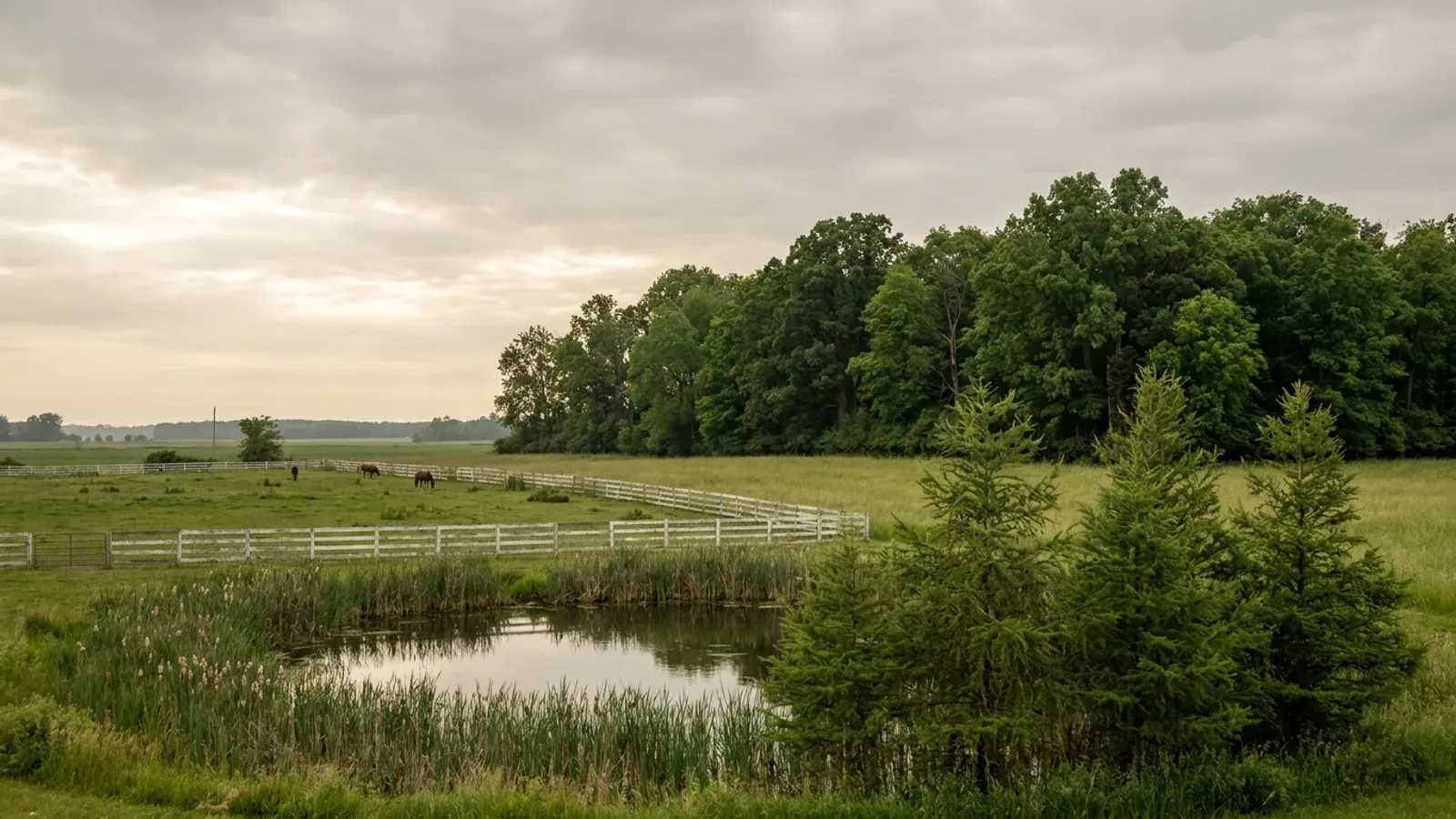
Oakland County runs from dense inner suburbs such as Troy, Southfield and Farmington Hills out to lake-dotted, rolling townships in the north and west, and that outer ring is where a barndominium on acreage is realistic. Townships such as Addison, Brandon, Groveland, Holly, Rose, Springfield, Oxford, Highland and Milford are where parcels of several acres, private wells and septic systems are still common. Each of the county's 63 cities, villages and townships runs its own building department and its own zoning, so a shouse with a big detached shop may be welcome in one township and capped by accessory-building limits in the next. That makes the township, not the county, the first call. On open land a pole barn home or steel-framed shouse is a natural fit; closer in, a compact house with an attached garage suits suburban lots. Barndominium kits work for owner-builders with a crew, while our turnkey builds and permitting service cover the full sequence. Send the parcel through the survey and we will check the township district, the accessory building rules and the septic outlook before you commit.
Oakland County at a glance
- County
- Oakland County
- Building permit
- Township building department
- Zoning
- Township zoning
- Wastewater
- Septic and well via the health department
Barndominium Kits and Plans for Oakland County
The parcel decides the budget more than the floor area does, so each option is priced against your land rather than a rate card.
Barndominium Kits
Barndominium kits and shell kits for sale in Michigan, sized for lake-effect snow and your site, with an honest answer on modular and prefab options.
Custom Plans
Custom barndominium plans and floor plans for Michigan land, designed around your site, your shop and the permit set your building department needs.
Pole Barn Homes near Oakland County
A pole barn home sets its frame on posts and trusses (the engineering term is post-frame), which often suits a simple, wide layout with a shop bay under the same roof. Whether it fits your parcel comes down to the zoning and the site, set out below.
Permits, Zoning and Septic in Oakland County
Four offices usually decide whether a barndominium can go on a given parcel. Here is who they are in Oakland County, taken from the office or document that publishes each rule. Rules change, so check them again against your parcel before anything is drawn.
Your township, city or village building department (every Oakland County unit runs its own)
The state's jurisdiction list shows every city, village and township in Oakland County with its own building program, so the permit comes from the local unit, not the county. In Brandon Township, for example, a new-house application needs two sets of construction plans, a plot plan showing the septic system and well, approved septic and well permits from the county health department, and a soil erosion permit or waiver.
Source: Building Info, Brandon Township (brandontownship.us)
Your township, city or village planning and zoning office
Oakland County states that it does not control planning and zoning for its cities, villages or townships; each local unit writes and enforces its own zoning ordinance. The county only reviews master plans and certain township rezonings for coordination across borders. Rural townships use their own districts, such as rural estates, to set larger lots and limits on accessory buildings like pole barns.
Source: Local Community Planning & Zoning, Oakland County (oaklandcountymi.gov)
Oakland County Health Division, Environmental Health Services
The Oakland County Health Division issues permits for new residential septic systems and carries out the construction and final inspections, with applications made online through its Citizen Access Portal. The same Health Division also inspects and issues permits for private water wells. The county says it has over 80,000 onsite sewage systems in service.
Source: Onsite Sewage Disposal System (Septic), Oakland County (oaklandcountymi.gov)
Oakland County Water Resources Commissioner
The Water Resources Commissioner runs the soil erosion program for the Oakland County communities without a local program, and publishes a jurisdiction map showing which ones those are. Its permit is required for an earth change over one acre, or for a project of more than 225 square feet within 500 feet of a lake, stream, wetland or drain.
Source: Soil Erosion and Sedimentation Control Program, Oakland County (oaklandcountymi.gov)
- Pole barn size on rural estate lots
- Brandon Township caps detached accessory buildings in its Rural Estates district at the living area of the house less any attached garage, or 2,400 square feet, whichever is greater, and adds 400 square feet for each acre over 2.5 acres on a single parcel; that extra acreage cannot later be split off (Brandon Township, read 27 September 2026).
- Erosion control after you move in
- The Water Resources Commissioner's permit transfers from the builder to the homeowner, who must keep silt fence and other controls in place until grass is established; a homeowner who lets them lapse gets a non-compliance letter and five days to correct it (Oakland County, read 27 September 2026).
Source: Zoning Information, Brandon Township (brandontownship.us)
Source: Soil Erosion and Sedimentation Control Program, Oakland County (oaklandcountymi.gov)
Building on land near Oakland County
Northern and western Oakland County is glacial country: kettle lakes, wetlands, hills and headwater streams sit between the farms and subdivisions, so a parcel's buildable area can be smaller than its acreage. Check the township zoning district and its accessory building formula first, then have the health division look at the soil for a septic field and well. Any work within 500 feet of a lake, stream, wetland or drain triggers a soil erosion permit on even a small footprint, and a regulated wetland needs EGLE review before fill or construction. Private roads and long driveways are common and add culvert and access requirements.
Other places in this part of Michigan
Detroit & Metro Detroit
- Detroit
- Dearborn
- Sterling Heights
- Wayne County
- Oakland County
- Macomb County
Have land in or near Oakland County? Tell us about the parcel and what you want on it, and we will check it against the local rules before anything is drawn.
Building in Oakland County: questions
Start the surveyHow much does it cost to build a barndominium in Oakland County?
Do I need a building permit for a barndominium in Oakland County?
How big a pole barn or shop can I build with a house in Oakland County?
Which parts of Oakland County are best for acreage?
Keep reading
What usually comes next once you know what Oakland County allows.
Barndominium Cost Guide
Sourced per-square-foot ranges by tier and size, and what moves the number on your land.
Read itIs a Barndominium Legal in Michigan?
Zoning, permits, septic and wells, and who inspects, before you buy the land.
Read itHow Long Does It Take?
From parcel to move-in, and which steps set the clock.
Read itSources for this page
The published pages behind the Oakland County facts above. Rules change, so check the current version with the office before you rely on it.
- Building Info, Brandon TownshipBuilding permitbrandontownship.us
- Local Community Planning & Zoning, Oakland CountyZoningoaklandcountymi.gov
- Onsite Sewage Disposal System (Septic), Oakland CountySewer, septic and welloaklandcountymi.gov
- Soil Erosion and Sedimentation Control Program, Oakland CountySoil erosion control; Erosion control after you move inoaklandcountymi.gov
- Zoning Information, Brandon TownshipPole barn size on rural estate lotsbrandontownship.us
Other places near Oakland County
Nearby places with their own pages. Across a city limit, a township line or a county line the permit office, the zoning and the septic rules can change, so each is covered separately.
Building in Oakland County?
Start with the survey. Tell us where the land is and what you want on it, and we will come back with which offices decide it, what the zoning allows, and a plan to fit.