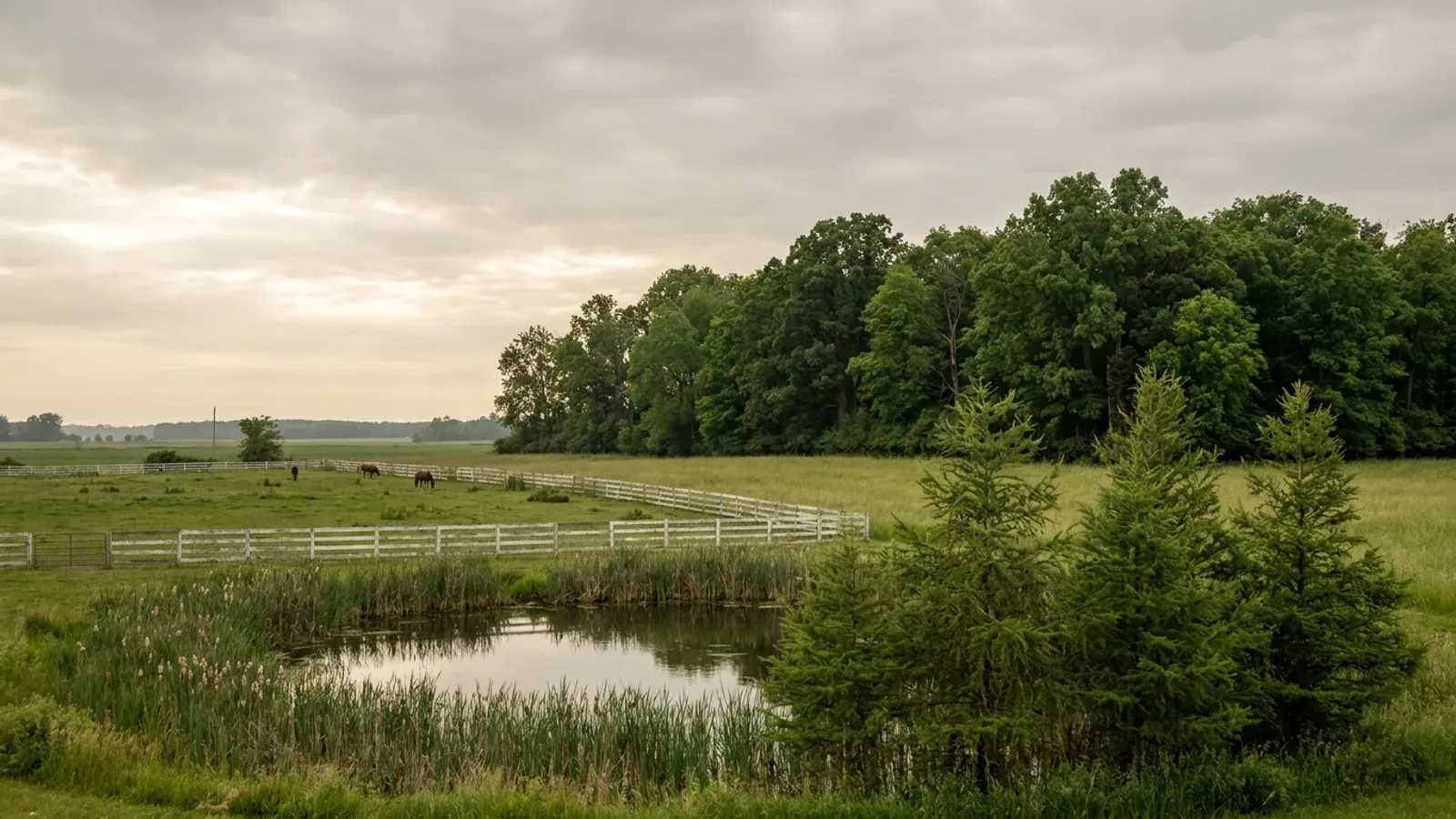
Barndominium Builders in Sterling Heights, Michigan
Sterling Heights is a large, dense suburban city, almost entirely subdivided into residential streets, commercial corridors and industrial parks, so open acreage for a classic barndominium is scarce inside its limits. A new house on an existing lot is still possible: a steel-framed home with an attached garage bay can work where the zoning district and setbacks allow it, and the city has its own building, planning and engineering offices under one roof on Utica Road. Buyers who want several acres, room for a big shop and a private well usually head north into the rural townships of Macomb County, where farmland zoning and larger parcels are common, or east to St. Clair County and Lapeer County. Barndominium kits fit an owner who will erect the shell with their own crew; a custom plan can squeeze a garage-shop onto a suburban lot; and a pole barn home is the usual frame once you reach open country. Tell us the parcel through the survey and we will check the zoning, any floodplain mapping along the Clinton River and the sewer connection before design begins.
Sterling Heights at a glance
- Principal county
- Macomb County
- Building permit
- City building department
- Zoning
- City zoning
- Wastewater
- Public sewer in town
Barndominium Kits and Plans for Sterling Heights
The parcel decides the budget more than the floor area does, so each option is priced against your land rather than a rate card.
Barndominium Kits
Barndominium kits and shell kits for sale in Michigan, sized for lake-effect snow and your site, with an honest answer on modular and prefab options.
Custom Plans
Custom barndominium plans and floor plans for Michigan land, designed around your site, your shop and the permit set your building department needs.
Pole Barn Homes near Sterling Heights
A pole barn home sets its frame on posts and trusses (the engineering term is post-frame), which often suits a simple, wide layout with a shop bay under the same roof. Whether it fits your parcel comes down to the zoning and the site, set out below.
Permits, Zoning and Septic in Sterling Heights
Four offices usually decide whether a barndominium can go on a given parcel. Here is who they are in Sterling Heights, taken from the office or document that publishes each rule. Rules change, so check them again against your parcel before anything is drawn.
City of Sterling Heights Office of Building
The Office of Building enforces the codes and ordinances for building, electrical, plumbing and mechanical work across the city, and it issues the permits and runs the inspections. Permit applications are available online, and the office publishes a residential plan review checklist.
Source: Building, Sterling Heights (sterlingheights.gov)
City of Sterling Heights Office of Planning
The Office of Planning reviews site development plans against the city's Zoning and Tree Preservation ordinances, checking building setbacks, floodplain conflicts, height limits, parking and site density. It supports the Planning Commission and the Zoning Board of Appeals, and it publishes the 2025 zoning map and Master Land Use Plan.
Source: Planning, Sterling Heights (sterlingheights.gov)
City of Sterling Heights Office of Engineering (water and sanitary sewer); Macomb County Health Department beyond the sewer
City lots are served by municipal water and sanitary sewer, and the Office of Engineering gives the availability, size and location of those lines and the connection details. On land without sewer elsewhere in the county, the Macomb County Health Department runs soil evaluations and issues septic permits.
Source: Engineering, Sterling Heights (sterlingheights.gov)
City of Sterling Heights Office of Engineering (Municipal Enforcing Agency)
Sterling Heights is a participating Municipal Enforcing Agency and enforces all soil erosion and sedimentation control applications and violations itself, under its own ordinance. A permit is generally required for earth changes that disturb one or more acres or lie within 500 feet of a lake or stream.
Source: Soil Erosion & Sedimentation Control Program, Sterling Heights (sterlingheights.gov)
- Building in the floodplain
- The city states that all development in the 100-year floodplain, including filling, excavation and fences as well as buildings, needs a permit from the city and from the state before work starts, and a federal permit may also apply. Its flood page names the Clinton River, Red Run Drain, Plumbrook Drain and Beaver Creek (City of Sterling Heights, read 27 September 2026).
- Buying rural land with a well or septic
- Beyond the city sewer, the Macomb County Health Department states that county regulation requires any property sold with a septic system or a drinking water well to have the systems evaluated before closing, by department staff or a registered evaluator; evaluations are valid for one year (read 27 September 2026).
Source: Flood Plain Permit Requirements, Sterling Heights (sterlingheights.gov)
Source: Property transfers, Macomb County Health Department (macombgov.org)
Building on land near Sterling Heights
Inside Sterling Heights the practical checks are the zoning district and its setbacks, the tree preservation rules that apply during site plan review, and the city's floodplain maps, which the Office of Engineering and the public library keep and which also appear as a layer on the city's GIS map. Lots near the Clinton River or one of the county drains deserve the closest look before an offer. For larger parcels with a well and septic system and space for a detached pole barn, the land is in the townships of northern Macomb County, where township zoning and the county health department take over.
Other places in this part of Michigan
Detroit & Metro Detroit
- Detroit
- Dearborn
- Sterling Heights
- Wayne County
- Oakland County
- Macomb County
Have land in or near Sterling Heights? Tell us about the parcel and what you want on it, and we will check it against the local rules before anything is drawn.
Building in Sterling Heights: questions
Start the surveyHow much does it cost to build a barndominium in Sterling Heights?
Do I need a building permit for a barndominium in Sterling Heights?
Is there land for a barndominium in Sterling Heights?
Keep reading
What usually comes next once you know what Sterling Heights allows.
Barndominium Cost Guide
Sourced per-square-foot ranges by tier and size, and what moves the number on your land.
Read itIs a Barndominium Legal in Michigan?
Zoning, permits, septic and wells, and who inspects, before you buy the land.
Read itHow Long Does It Take?
From parcel to move-in, and which steps set the clock.
Read itSources for this page
The published pages behind the Sterling Heights facts above. Rules change, so check the current version with the office before you rely on it.
- Building, Sterling HeightsBuilding permitsterlingheights.gov
- Planning, Sterling HeightsZoningsterlingheights.gov
- Engineering, Sterling HeightsSewer, septic and wellsterlingheights.gov
- Soil Erosion & Sedimentation Control Program, Sterling HeightsSoil erosion controlsterlingheights.gov
- Flood Plain Permit Requirements, Sterling HeightsBuilding in the floodplainsterlingheights.gov
- Property transfers, Macomb County Health DepartmentBuying rural land with a well or septicmacombgov.org
Other places near Sterling Heights
Nearby places with their own pages. Across a city limit, a township line or a county line the permit office, the zoning and the septic rules can change, so each is covered separately.
Building in Sterling Heights?
Start with the survey. Tell us where the land is and what you want on it, and we will come back with which offices decide it, what the zoning allows, and a plan to fit.