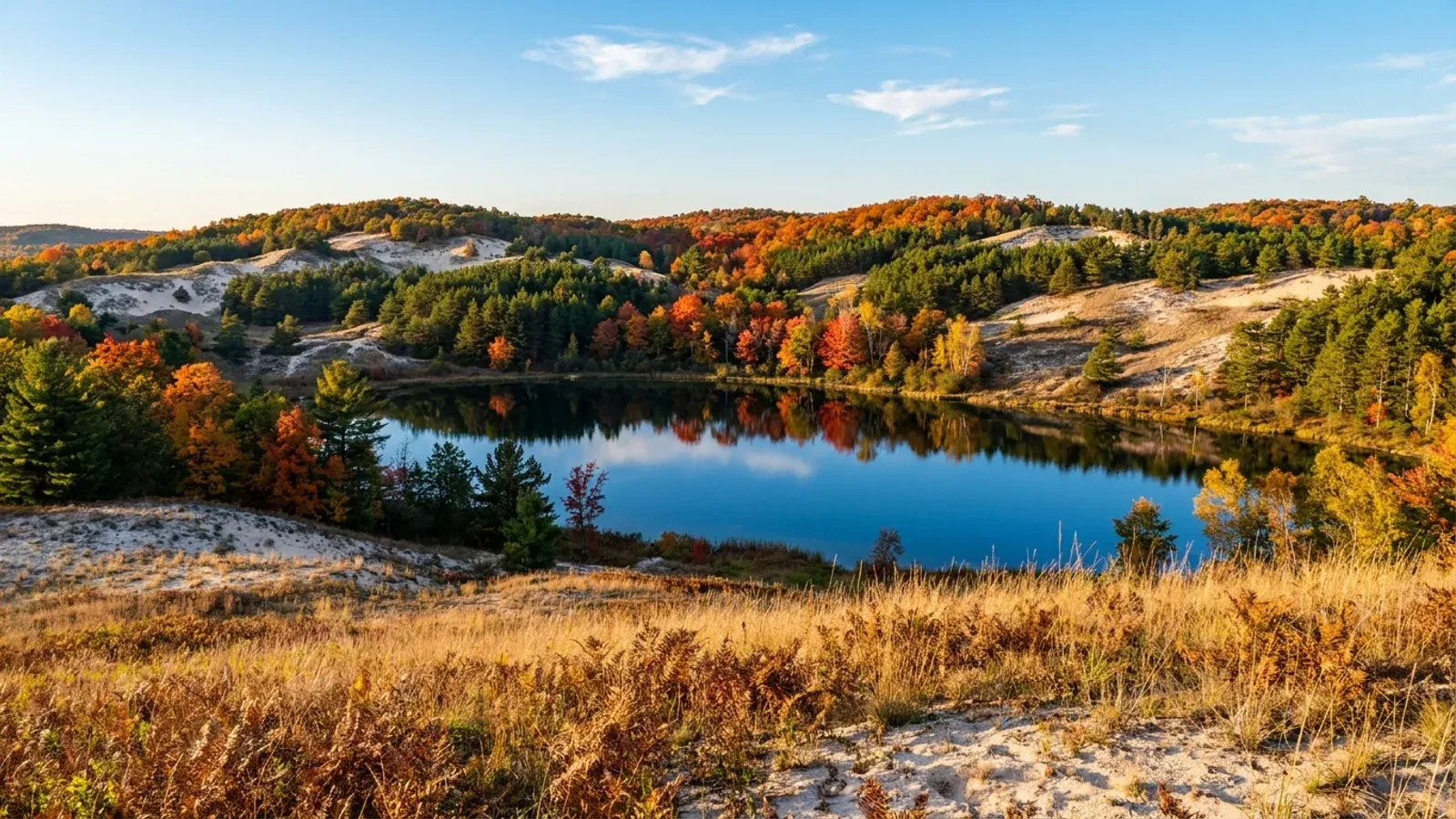
Barndominium Builders in Traverse City, Michigan
Traverse City is in Grand Traverse County (a small part lies in Leelanau County), and most buyers who call about a barndominium here are really shopping for land just outside the city: a few wooded or open acres in the surrounding townships, room for a shop, and a winter-ready house under one roofline. Inside the limits the lots are smaller and served by city sewer and water, so a compact plan with an attached garage fits better than a wide shop building. We work both ways. Barndominium kits make sense for an owner with a capable crew who wants to raise the shell themselves; a custom plan shapes the layout around a narrow lot, a slope or a view of the water; and pole barn homes are the usual frame on rural acreage up here, where deep snow on the roof is part of the design brief rather than an afterthought. For a finished house, our turnkey builds cover site work through final inspection. Before you make an offer on a parcel, send the address through the survey and we will check which township or city office decides zoning, whether sewer reaches the lot, and how close it sits to a lake, the bay or a stream.
Traverse City at a glance
- Principal county
- Grand Traverse County
- Building permit
- County building department
- Zoning
- City zoning
- Wastewater
- Public sewer in town
Barndominium Kits and Plans for Traverse City
The parcel decides the budget more than the floor area does, so each option is priced against your land rather than a rate card.
Barndominium Kits
Barndominium kits and shell kits for sale in Michigan, sized for lake-effect snow and your site, with an honest answer on modular and prefab options.
Custom Plans
Custom barndominium plans and floor plans for Michigan land, designed around your site, your shop and the permit set your building department needs.
Pole Barn Homes near Traverse City
A pole barn home sets its frame on posts and trusses (the engineering term is post-frame), which often suits a simple, wide layout with a shop bay under the same roof. Whether it fits your parcel comes down to the zoning and the site, set out below.
Permits, Zoning and Septic in Traverse City
Four offices usually decide whether a barndominium can go on a given parcel. Here is who they are in Traverse City, taken from the office or document that publishes each rule. Rules change, so check them again against your parcel before anything is drawn.
Grand Traverse County Construction Code office, after the city's land use permit
In Traverse City the plans go to the city first: the Zoning Administrator checks them against the Zoning Code and issues a land use permit. The applicant then takes the city-approved plan sets to the Grand Traverse County Construction Code office to apply for the building permit, so one house passes through two counters. The state's jurisdiction list shows the city as running its own program, so confirm the routing when you apply.
Source: Site Plan Approval Process for Land Use Permit, City of Traverse City (traversecitymi.gov)
City of Traverse City Planning & Zoning Department
The city's Planning & Zoning Department prepares the Master Plan, which shapes the zoning ordinance, and is responsible for zoning districts, code enforcement and site plan approval. The Zoning Code sits in the city's code of ordinances, and a zoning map shows the district of each lot, which decides whether a larger garage-shop fits.
Source: Planning & Zoning, City of Traverse City (traversecitymi.gov)
City sewer and water inside Traverse City; Grand Traverse County Health Department off the sewer
City lots normally connect to municipal sewer and water. Where a parcel has no access to municipal systems, the Grand Traverse County Health Department's Environmental Health Division issues the septic permit after a sanitarian's field evaluation, and it also issues well construction permits for private homes.
Source: On-Site Septic Systems, Grand Traverse County (gtcountymi.gov)
City of Traverse City Engineering Department
Traverse City runs its own soil erosion program instead of using the county's. The city Engineering Department reviews utilities alongside land use permits and administers and inspects soil erosion permits and stormwater runoff control permits for work inside the city limits.
Source: Engineering, City of Traverse City (traversecitymi.gov)
- Snow load for roof design
- The state's residential code rules set a ground snow load of 60 pounds per square foot for all of Grand Traverse County, one of the heavier figures in the Lower Peninsula, and roof trusses, purlins and posts are sized from it (snow-load Table R301.2(5) of those rules, read 27 September 2026).
- Small sheds on a city lot
- The city's Planning & Zoning FAQ says accessory buildings under 200 square feet need no building permit, but must sit in the rear yard and no closer than 4 feet to the side and rear lot lines; anything larger, such as a detached shop, is permitted like other construction (read 27 September 2026).
Source: Construction Code, Part 5 Residential Code rules (R 408.30500 to R 408.30547g) (ars.apps.lara.state.mi.us)
Source: Frequently Asked Questions, Planning & Zoning, City of Traverse City (traversecitymi.gov)
Building on land near Traverse City
Most acreage near Traverse City lies in the townships around it, where each township sets its own zoning and a private well and septic system replace city utilities. Parcels near Grand Traverse Bay, the Boardman River or one of the inland lakes deserve a closer look, since distance to water can bring a soil erosion permit and, for existing homes with septic, a county evaluation at sale. Wooded, rolling ground is common, so budget for a driveway, clearing and grading. Our Grand Traverse County page covers who decides what outside the city, and site preparation explains the ground work.
Pole Barn Builders in Northern Michigan
Across Northern Michigan most barndominium land is rural acreage, where a pole barn home with a shop bay under the same roof is a common way to build. Each place below has its own page, because the permit office, the zoning and the septic rules can change at a city limit or a county line.
Pole Barn HomesTraverse City & Northern Michigan
- Traverse City
- Mount Pleasant
- Cadillac
- Grand Traverse County
- Isabella County
Have land in or near Traverse City? Tell us about the parcel and what you want on it, and we will check it against the local rules before anything is drawn.
Building in Traverse City: questions
Start the surveyHow much does it cost to build a barndominium in Traverse City?
Do I need a building permit for a barndominium in Traverse City?
Can I build a pole barn home with a big shop near Traverse City?
Who handles septic and well permits outside Traverse City?
Keep reading
What usually comes next once you know what Traverse City allows.
Barndominium Cost Guide
Sourced per-square-foot ranges by tier and size, and what moves the number on your land.
Read itIs a Barndominium Legal in Michigan?
Zoning, permits, septic and wells, and who inspects, before you buy the land.
Read itHow Long Does It Take?
From parcel to move-in, and which steps set the clock.
Read itSources for this page
The published pages behind the Traverse City facts above. Rules change, so check the current version with the office before you rely on it.
- Site Plan Approval Process for Land Use Permit, City of Traverse CityBuilding permittraversecitymi.gov
- Planning & Zoning, City of Traverse CityZoningtraversecitymi.gov
- On-Site Septic Systems, Grand Traverse CountySewer, septic and wellgtcountymi.gov
- Engineering, City of Traverse CitySoil erosion controltraversecitymi.gov
- Construction Code, Part 5 Residential Code rules (R 408.30500 to R 408.30547g)Snow load for roof designars.apps.lara.state.mi.us
- Frequently Asked Questions, Planning & Zoning, City of Traverse CitySmall sheds on a city lottraversecitymi.gov
Other places near Traverse City
Nearby places with their own pages. Across a city limit, a township line or a county line the permit office, the zoning and the septic rules can change, so each is covered separately.
Building in Traverse City?
Start with the survey. Tell us where the land is and what you want on it, and we will come back with which offices decide it, what the zoning allows, and a plan to fit.