Barndominium Builders in Grand Traverse County, Michigan
Grand Traverse County is where most northern Michigan barndominium projects we hear about actually land: acreage in Blair, Long Lake, Green Lake, Whitewater or Paradise Township, a lot within reach of Traverse City, and a design that has to carry one of the heaviest snow loads in the Lower Peninsula. A house with a heated shop bay under one roof suits the way people live here, storing boats, trailers and snow equipment beside the living space. Barndominium kits work for an owner who wants to erect the shell with their own help; a custom plan fits the house to a slope, a tree line or a lake view; and pole barn homes remain the common frame on rural ground. The county's rules are layered, so the first job on any parcel is to find out which township zones it, whether the county or a local office issues the building permit, and whether water, wetland or steep ground triggers extra review. Tell us about the land through the survey and we will map out those offices before you commit, then quote a turnkey build or a shell against the real site.
Grand Traverse County at a glance
- County
- Grand Traverse County
- Building permit
- Township, county or state
- Zoning
- Township zoning
- Wastewater
- Septic and well via the health department
Barndominium Kits and Plans for Grand Traverse County
The parcel decides the budget more than the floor area does, so each option is priced against your land rather than a rate card.
Barndominium Kits
Barndominium kits and shell kits for sale in Michigan, sized for lake-effect snow and your site, with an honest answer on modular and prefab options.
Custom Plans
Custom barndominium plans and floor plans for Michigan land, designed around your site, your shop and the permit set your building department needs.
Pole Barn Homes near Grand Traverse County
A pole barn home sets its frame on posts and trusses (the engineering term is post-frame), which often suits a simple, wide layout with a shop bay under the same roof. Whether it fits your parcel comes down to the zoning and the site, set out below.
Permits, Zoning and Septic in Grand Traverse County
Four offices usually decide whether a barndominium can go on a given parcel. Here is who they are in Grand Traverse County, taken from the office or document that publishes each rule. Rules change, so check them again against your parcel before anything is drawn.
Grand Traverse County Construction Code office for most townships; Garfield Charter Township issues its own
The county Construction Code office issues building permits for most townships and for the villages of Fife Lake and Kingsley; Garfield Township issues its own, and the City of Traverse City routes plans through its zoning office first. Cities, villages and townships can each run their own program, so check the BCC Statewide Jurisdiction List. The county office issues electrical, mechanical and plumbing permits countywide.
Source: Building Permit Process, Grand Traverse County (gtcountymi.gov)
Your township's zoning administrator (land use permit)
Zoning here is township business. The county's building office notes that most projects also need a land use permit from the township, and that each township has its own set of regulations; it publishes the list of township, village and city offices to contact. Minimum lot sizes, setbacks and accessory-building rules for rural and farm land therefore differ from one township to the next.
Source: List of Townships, Grand Traverse County (gtcountymi.gov)
Grand Traverse County Health Department, Environmental Health Division
The county Health Department's Environmental Health Division issues septic permits after a sanitarian's field evaluation of soil and groundwater, and issues well construction permits; the owner then hires a registered well driller. Vacant parcels can get a site evaluation, often called a perc test, before purchase.
Source: Drinking Water & Wells, Grand Traverse County (gtcountymi.gov)
Grand Traverse County Soil Erosion & Sedimentation Control (Environmental Health)
The county soil erosion office serves everywhere except inside Traverse City. Beyond the state triggers (more than one acre, or within 500 feet of a lake or stream), a county ordinance also requires a permit within 500 feet of a regulated wetland or a county drain, on slopes of 20 percent or more, or on Group D hydrologic soils.
Source: Soil Erosion & Sedimentation Control, Grand Traverse County (gtcountymi.gov)
- Septic and well check at sale near water
- Under a county regulation effective 1 January 2026, a premises with a septic system or well cannot be sold or transferred without a Health Department evaluation and approval if it contains a dwelling within 300 feet of surface water, measured from the closest part of the dwelling (Grand Traverse County regulation, read 27 September 2026).
- Ground snow load
- The state's residential code rules list Grand Traverse County at 60 pounds per square foot of ground snow load for every unit of government in the county, with no local exceptions, so every roof here is designed to that figure (snow-load Table R301.2(5) of those rules, read 27 September 2026).
Source: Grand Traverse County Regulation for the Evaluation of On-Site Water and Sewage Disposal Systems at the Time of Property Transfer (gtcountymi.gov)
Source: Construction Code, Part 5 Residential Code rules (R 408.30500 to R 408.30547g) (ars.apps.lara.state.mi.us)
Building on land near Grand Traverse County
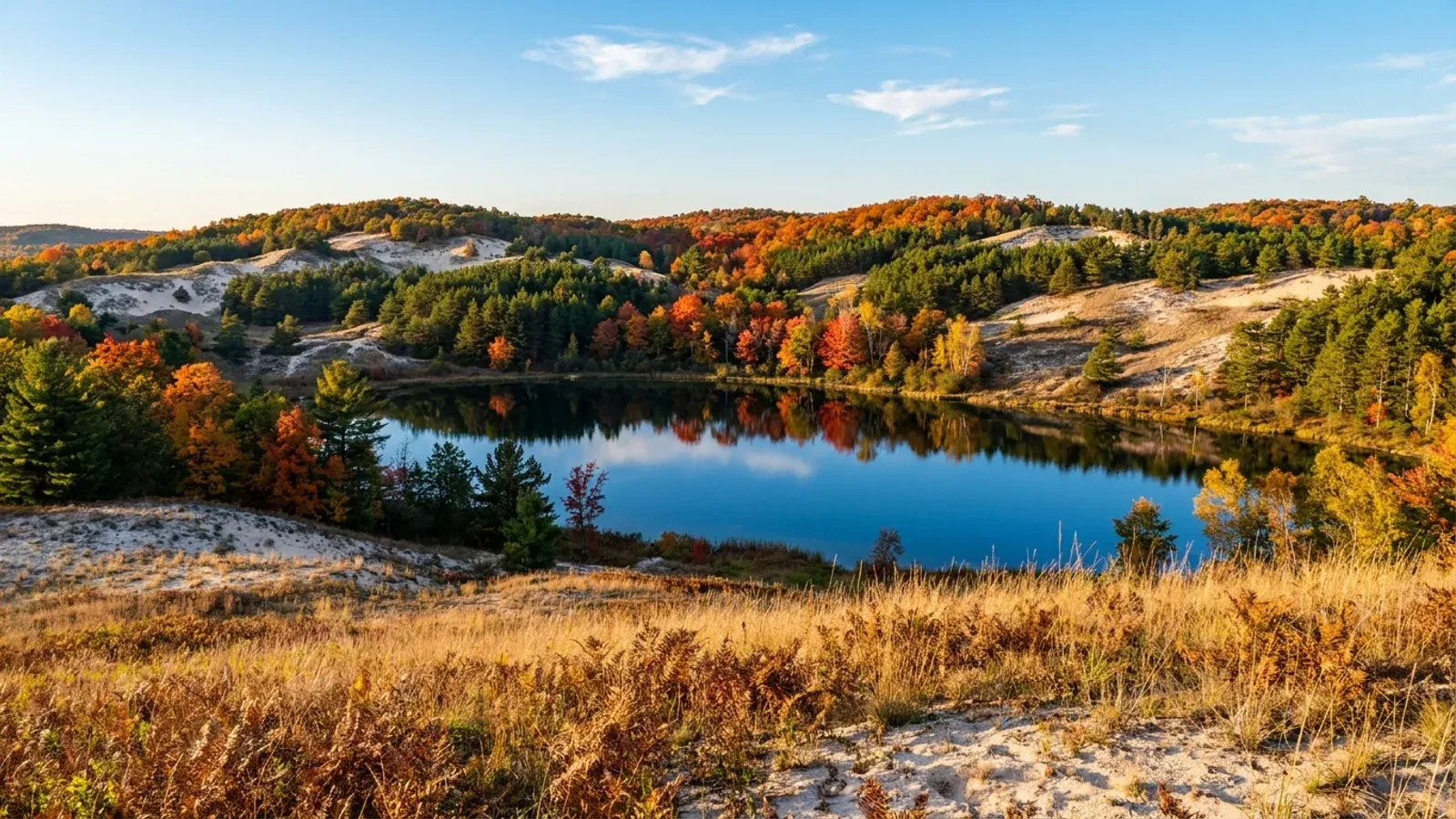
Land in the county runs from orchard country on the peninsula to sandy, wooded ground and chains of inland lakes in the south and west. That variety changes the checklist: a lakeside or creekside lot can pull in soil erosion review and, later, Grand Traverse County's time-of-transfer septic evaluation; hilly ground can meet the county's 20 percent slope trigger; and heavy clay soils can limit septic design. Ask the township for its zoning district and minimum lot size, order the Health Department's site evaluation, and walk the driveway route in winter. Closer to town, the Traverse City page covers city lots on sewer.
Other places in this part of Michigan
Traverse City & Northern Michigan
- Traverse City
- Mount Pleasant
- Cadillac
- Grand Traverse County
- Isabella County
Have land in or near Grand Traverse County? Tell us about the parcel and what you want on it, and we will check it against the local rules before anything is drawn.
Building in Grand Traverse County: questions
Start the surveyHow much does it cost to build a barndominium in Grand Traverse County?
Do I need a building permit for a barndominium in Grand Traverse County?
Which township rules apply to my land?
Does buying a lakefront home or lot trigger a septic inspection?
Keep reading
What usually comes next once you know what Grand Traverse County allows.
Barndominium Cost Guide
Sourced per-square-foot ranges by tier and size, and what moves the number on your land.
Read itIs a Barndominium Legal in Michigan?
Zoning, permits, septic and wells, and who inspects, before you buy the land.
Read itHow Long Does It Take?
From parcel to move-in, and which steps set the clock.
Read itSources for this page
The published pages behind the Grand Traverse County facts above. Rules change, so check the current version with the office before you rely on it.
- Building Permit Process, Grand Traverse CountyBuilding permitgtcountymi.gov
- List of Townships, Grand Traverse CountyZoninggtcountymi.gov
- Drinking Water & Wells, Grand Traverse CountySewer, septic and wellgtcountymi.gov
- Soil Erosion & Sedimentation Control, Grand Traverse CountySoil erosion controlgtcountymi.gov
- Grand Traverse County Regulation for the Evaluation of On-Site Water and Sewage Disposal Systems at the Time of Property TransferSeptic and well check at sale near watergtcountymi.gov
- Construction Code, Part 5 Residential Code rules (R 408.30500 to R 408.30547g)Ground snow loadars.apps.lara.state.mi.us
Other places near Grand Traverse County
Nearby places with their own pages. Across a city limit, a township line or a county line the permit office, the zoning and the septic rules can change, so each is covered separately.
Building in Grand Traverse County?
Start with the survey. Tell us where the land is and what you want on it, and we will come back with which offices decide it, what the zoning allows, and a plan to fit.